

Background Color

 Add to favorites
Throughout the years of my recipe blogging, I have come to notice that there is some confusion about the difference between coconut oil and coconut butter. So I thought I would write a little explanation about each and put the confusion to rest.
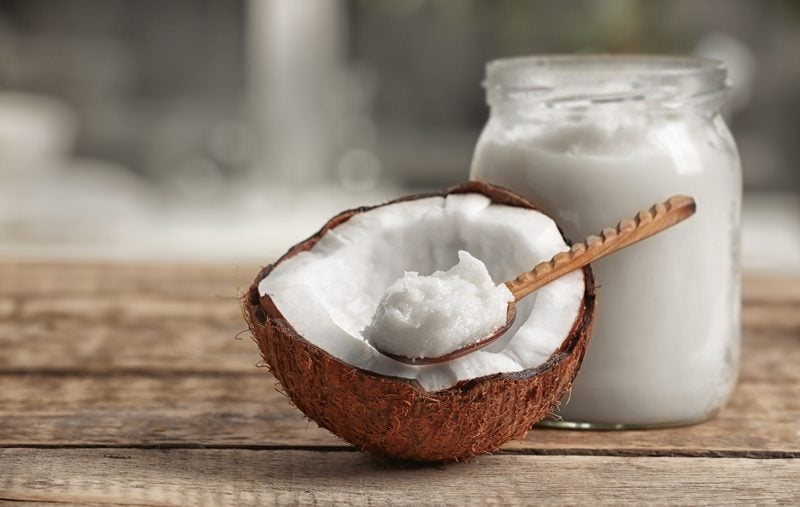
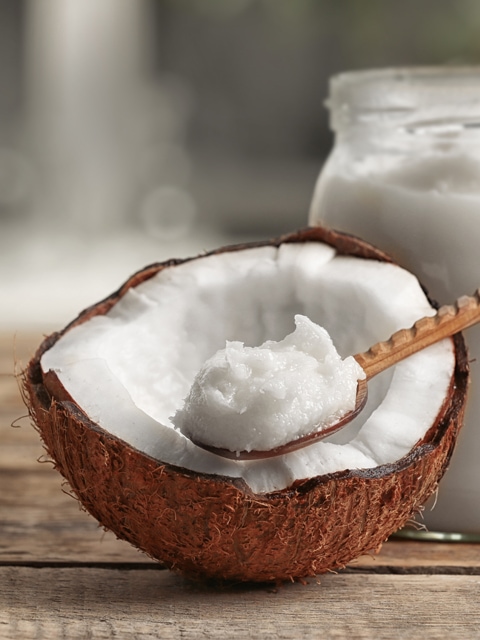
Coconut oil is JUST the oil that is extracted from the meat. Coconut butter is the whole meat of the coconut pureed into a creamy butter. And just a little FYI, coconut meat (by nature) is approximately 65% oil.
That was the boy version of explanation… now here’s the girl version… (my husband and I always joke about which version of the story that we share with one another. Boy version is explained in the least amount of words. Girl version goes into great detail… always getting then you needed, wanted, or expected. lol
Raw Coconut Butter is a whole food, not just oil. It melts in your mouth with a full coconut flavor and aroma, while giving you whole coconut nutrition: oil, dietary fiber, protein, vitamins, and minerals. No additives—only pure, unadulterated coconut.
It is wonderful added to smoothies, fruit salads, sauces, salad dressings, and baked goods. Use it as a hard shell topping for ice cream (once poured onto cold ice cream, it creates a shell), mix with cacao nibs or fruit to create your own dessert sensations, or eat it right out of the jar. Delectable! Us as an icing on scones, cookies and more. Just drizzle melted coconut butter on top, chill it and it becomes dry to the touch.
When you first get home with your coconut butter, it might look as though it separated (you will see perhaps an off-white color on the bottom with a white layer on top). This is normal. This just indicates that the oil was separating from the butter. Raw Coconut Butter is soft at above 80 degrees (F) and solid at lower temperatures. You can soften it by putting the jar in a bowl of warm water and once soft enough, stir well for a creamy, smooth texture. Another way to soften it is placing the open jar in a food dehydrator, warm at 115 degrees (F) until soft. After 15 minutes, stir the butter, and then put back in for another 15 minutes, then mix well before serving.
Basically, because it has more in common with nut butters than coconut oil since it is made from the whole flesh of the coconut. Sometimes it is referred to as coconut cream or manna, so if you are ever in doubt as to why I am calling for in my recipes or another chef’s recipes… be sure to ask for clarification. Be sure to look for 100% organic raw coconut butter that is made by using a low-temperature process (below 115° F.) This preserves the vital enzymes, vitamins, and proteins.

Coconut oil contains absolutely no trans fats. Although many people mistakenly believe coconut oil is dangerous to health due to its saturated fat content, close to two-thirds of its saturated fat is made up of medium-chain fatty acids, which are actually health promoting and they are antimicrobial, easily digested for quick energy, and beneficial to the immune system. The body uses MCT’s as fuel rather than storing it as fat in the body.
The popular misconceptions about coconut oil can be traced to some decades-old flawed studies, some of which used hydrogenated (chemically altered, unnatural) coconut oils, and to misleading advertising campaigns generated by the edible oil industry.
The industry instead promoted polyunsaturated fats (such as canola, soybean, safflower. and corn), which easily go rancid when exposed to oxygen and produce harmful free radicals in our bodies. Coconut oil was falsely accused of leading to coronary heart disease, a myth that has been refuted by a large body of research showing that consumption of natural coconut oil is beneficial to health, including cardiovascular health.
One way to enjoy it is purely for its health benefits. It is known to help promote weight loss and maintain healthy body weight. Supports thyroid function. Increases metabolism and energy. Prevents bacterial, viral, and fungal infections. Helps control diabetes and chronic fatigue. Protects against alcohol damage to the liver and rejuvenates skin and prevents wrinkles
Culinary wise, it is great added to smoothies, mixed into to raw cookies, breads, and puddings. You can soften it by putting the jar in a bowl of warm water and once soft enough, stir well for a creamy, smooth texture. Another way to soften it is placing the open jar in a food dehydrator, warm at 115 degrees (F) until soft. After 15 minutes, stir the Manna, and then put back in for another 15 minutes, then mix well before serving.
Look for coconut oil that is a virgin, cold-pressed, vitamin E rich, “biologically pure” one that is identical to unextracted oil from coconuts. Most commercial coconut oils are refined, bleached, and deodorized, and many are made from “copra,” or dried coconut meat. Some are even hydrogenated.
The answer is not a straight yes or no. Coconut butter has a different flavor and texture than the coconut oil. As a safe rule of thumb, if you are reading a recipe and they use either coconut oil or coconut butter and you are unclear as to what they are using, email or contact that recipe designer and ask them to clarify.

this article helped me. i thought that coconut butter and coconut oil were one in the same because i have read that. today i tried to make raw frozen chocolate covered bananas. i used coconut butter. there was some oil on the top of the jar so i used that too. when i mixed in all of the ingredients it wasnt liquidy enough. i did the best i could and rolled them in chopped raw almonds so they actually came out tasting and looking fine but it was hard to work with. next time, i use the OIL. thanks
Hi Sheri, I am glad that this helped to clear things up for you. I understand where you were coming from because I was also reading such confusing information as to whether or not the two are the same. Many people think they are or they loosely inter-change the words. That is what lead me to write this up…I had to research it for myself so I knew. :) Thank you for posting! I love hearing your comments. Many blessings Sheri, amie sue
Hi, this article helped alot… thanks for your research. I have a recipe calling for coconut oil, but have the Artisana coconut butter in my pantry, so I will try this recipe w/the butter instead of the oil, and see what happens… thanks much.
I make lotions and usually use the raw oil in my lotion.. Would the butter work instead? I bought some by accident and have had success when make eggs for my son but not sure how it would work for my lotion. I’m leaning toward the thought it could be better, but would like your opinion.
Thanks
Lorraine
Hi Lorraine,
I don’t have any experience in making lotions, so I am not able to able your question. I fear that if I made a lotion from coconut butter, I would eat it right off my skin! haha
DOES COCONUT BUTTER HAVE THE SAME HEALTH BENEFITS HAS COCONUT OIL? I WAS TOLD TO TAKE 1-2 TABLESPOONS A DAY OF OIL, BUT THE BUTTER TASTE SOOOOOO MUCH BETTER AND A HECK OF A LOT EASIER TO GET DOWN.
Hello Melissa,
Personally, I think we get more from the coconut oil. The butter is most amazing and I could eat a jar in one sitting. I too have been working on increasing my Coconut oil, I use it when I cook too. Did you get the last recipe email of the coconut barks I created? I designed specifically for the purpose for helping me in getting more of the oil in my body. The better has fiber, which is good but I think a person get a “more concentrated” response from the oil. Hope that helps.
amie sue
What is the difference between creamed coconut and coconut butter? I put creamed coconut in my rice but want to make a dessert that asks for coconut butter. The creamed coconut is a lot cheaper.
Good afternoon Nichole,
Let me start by first asking this…. is the product being raw a factor for you? This will help me answer more clearly.
Thank you so much for this info. I have a recipe that calls for both coconut oil & butter, but I could only find oil at the store. I figured there had to be a difference since it called for both. Where is the best place to buy coconut butter?
Julia,
I can find the coconut butter at Whole Foods and my local health food store. You can order it through Amazon as well.
I work at Marshalls & I got an 8 oz jar of Coconut butter for just $6. I know not all Marshall’s have the same products, but it doesn’t hurt to try. =D
Hi Nysha… you are so right! I have seen some good deals on coconut oil, even raw cacao by David Wolfe. It is amazing what you can find at those stores. It’s not consistent but I always look when I am either in Marshall’s or Home Goods (owned by the same company right?) Thanks for sharing, amie sue
Hey! I was trying to make a raw icecream recipe, but i can’t eat coconut meat right now. ( can have the oil however )
Anyways, I am wondering if i could use hazel nuts and brazil nuts as a “nut butter” base for an icecream without the coconut meat involved. could you somehow sub in the oil in a certain ratio for coconut meat?
Good morning Mariel,
Because this question isn’t pointing to a specific recipe, my answer can be varying…. but in general you can use nut butters for sure instead of the coconut meat. Cashews are the best if you want a smooth mouth texture but all nuts will lend a great flavor to raw ice cream. You can add the coconut oil in too, the amount depends on the over-all volume of the recipe. I would start with maybe 1/4 of a cup. Good luck! amie sue
Hi, I see that the Nutiva Manna is made from dried coconut, but when you are talking about how regular coconut oil is made you mention “copra” and act like its a bad thing. So does this mean I should not get the Nutiva stuff because its made from copra?
Why would one have to mix up the butter or manna before eating?
Do you know if coconut oil or butter contain phytic acid?
Are all of the vitamins and minerals contained in the coconut oil, or are some in the meat that are lost when it is separated into the oil?
Thanks!
Hello Bren,
I am not stating what a person should or shouldn’t eat… it’s a matter of knowing and education yourself regarding the food you are eating and how it is processed. Some coconut oils and mannas are raw and some are not. I think the main thing to take from this is that many commercial coconut oils are refined, bleached, and deodorized. It is just to become aware of this when making your purchase.
Why do you need to mix it? If you have purchased coconut manna/butter, you will notice that there is a bit of separation that takes place in the jar, stirring it together will just distribute some of the oil that may have separated from the meat, this happens in shipping. Mixing it also warms it up a tad and it will also help to make it more spreadable. You don’t have to do this…eat as is! It has a melting point around 76 degrees.
Does coconut contain phytic acid? yes
PHYTIC ACID LEVELS8
In milligrams per 100 grams of dry weight
Brazil nuts 1719
Cocoa powder 1684-1796
Brown rice 12509
Oat flakes 1174
Almond 1138 – 1400
Walnut 982
Peanut roasted 952
Peanut ungerminated 821
Lentils 779
Peanut germinated 610
Hazel nuts 648 – 1000
Wild rice flour 634 – 752.5
Yam meal 637
Refried beans 622
Corn tortillas 448
Coconut 357
Corn 367
Entire coconut meat 270
White flour 258
White flour tortillas 123
Polished rice 11.5 – 66
Strawberries 12
More reading on phytic acide – http://www.westonaprice.org/food-features/living-with-phytic-acid
Are all of the vitamins and minerals contained in the coconut oil, or are some in the meat that are lost when it is separated into the oil?
Mann – http://nutritiondata.self.com/facts/custom/627740/2
oil – http://nutritiondata.self.com/facts/fats-and-oils/508/2
I would suggest that if you have or need more detailed answers to your question, to get out there and research. If you can’t find all the answers, contact the manufactures of the product that you are looking at. There is TONS of information out there. Have a great day, amie sue
Dear Amie-Sue,
Thank you for having such an informative website! I am new to the raw world (vegan for 2 years now) and I only have a million questions that your site is providing many answers to.
Regarding the choosing of coconut oil – I have always used Dr. Bronner’s whole kernel vco, but after reading this article I went to their website
http://www.drbronner.com/DBMS/FPCOWHOLE14/FairTradeOrganicWholeVirginCoconutOil.htm
And while it says that their oil is cold pressed, it’s from “carefully dried coconuts.”
Is this copra? I intend to contact them to verify if it is indeed raw, but I’d like your opinion.
Thanks again :)
Hello Keslie,
I am happy to hear that you are gaining information through my site. my goal is to help others in their journey. :) I personally don’t have experience with Dr. Bronner’s whole kernel VCO but it sound interesting. From what I have read it is possible that it could be raw, it just depends on the way it is processed, which will vary from supplier to supplier. If you ever question how a product is processed, I highly recommend that you contact the manufacture, just like you mentioned doing. “carefully dried coconut” can mean and be taken to mean so many things… best to question them. Keep me posted if you would on what you find out from them. Blessings, amie sue
I purchased some shredded dried organic coconut and put it in my Vita Mix and turned it into coconut butter and it’s delicious!!!
Oh yes indeed Sophie, that works as well. :)
Thanks for the great info, I’m a nutritionist looking for an easier way to explain to clients the difference between the two. This greatly helped! :)
Maria,
Oh, I am so glad that you found this useful. :) Thank you for stopping by and have a great day! amie sue
Would also like to add that I get great quality coconut oils AND butter from my local health food store….The Natural Food Depot at 2075 Lawrence Ave E (Warden and Lawrence).
since coconut butter is the whole meat of the coconut, does it have more health benefits ( lauric acid/ medium chain tryglicerides) than coconut oil? i noticed that the butter has more calories and more carbs, etc
Hello Danielle,
I can’t say if one is better over the other. They both have great health benefits and they both offer different properties when it comes to recipe making or eating. Comparing the brand from Nutiva…
Coconut Oil: per Tbsp
Calories: 130
Fat: 14 g
Carbs: 0
Fiber: 0
Protein: 0
Coconut Butter: per Tbsp
Calories: 100
Fat: 9 g
Carbs: 3 g
Fiber: 2 g
Protein: 1 g
So you can see the main difference. I believe that both have a great place in the diet. I am known to eat spoonfuls of the butter but there is no way I could consume the oil in the same way. This is something that requires some deep research, as I do not have a scientific background in this area. I read great things about each one therefore both are apart of my pantry for use. I know this really didn’t answer you question but it’s the best I can do off the top of my head.
Hello Danielle,
I just came across a small blip on coconut butter and how good it is for you. Your question again was…”since coconut butter is the whole meat of the coconut, does it have more health benefits ( lauric acid/ medium chain tryglicerides) than coconut oil?” I still haven’t found if the butter has more than the oil…but here is quote I found from a nutrionist…..
Coconut butter (sometimes called Coconut Cream Concentrate) is a great snack to reach for when you want something sweet to eat or just for an energy boost. It’s a good source of lauric acid which, according to Mary Enig and Sally Fallon on page 48 of their book “Eat Fat, Lose Fat,” is “a proven antiviral, antibacterial, antifungal agent that’s also found in mother’s milk. Converted in your body to a substance called monolaurin, it helps you defent against viruses, bacteria and other pathogens and strengthens your immune system, protecting you from a wide range of diseases.” Lauric acid is only found in very few food sources: butterfat (in small amounts) and coconut and palm kernel oil.
If I find more interesting info, I will keep you posted but wanted to share that so far…
Thank you for this post! I was wondering this very thing today!
Your welcome Ashley :)
If I were to substitute the manna instead of coconut flakes in a recipe, do you know what is the conversion? Love coconut, don’t like the texture of flakes, and would rather use manna to get the flavor. Thanks
HI Donna… I don’t know the answer to this. It will depend on the recipe and what role the coconut flakes play. Are they for bulk? Flavor? etc. Without seeing what your making, I would make the recipe and start with a lessor amount and add more if needed. Have a great day, amie sue
Can I use the coconut butter on my skin after my bath or shower?
Hi Francie… hmm, good question. I don’t think I would want to. Coconut oil would be a better choice. Coconut butter is more expensive and tastes devine! I would save it for culinary purposes… personally. :)
Hi. Do you have any scientific sources that are saying coconut oil are healthy?
Hello Darko… I don’t have any scientific documents off hand. I have read books and tons of write ups on it that state the many wonderful and amazing facts. If you want specifics, I would recommend contacting a manufacture of coconut oil and ask them if they would provide you with scientific studies and documents. Have a great day, amie sue
My Finance and I are starting a Gluten-Free, preservative free and lots of raw food diet! We are learning everyday. This is both a challenge and fun for us. We both enjoy eating popcorn, we make it ourselves on the stove. The typical ingredients used are popcorn, salt and coconut oil or (flavored coconut oil) depending on which brand of oil we use. Should I call the company regarding this being free of what we would like out diet to be free of or am I safe to assume that it is? Also, do you eat popped popcorn on a 100% RAW diet? I am still very new at this! Thanks a billion :)
Hello Jaclyn,
I am so happy to hear that you two are enjoying the journey of eating healthier! :) Good job! I would stir clear of the flavored coconut oil. Most likely it has chemicals in it… stick to the real coconut oil.
Personally, I can’t eat popcorn, to rough on my healing gut right now. If you are aiming for 100%, popcorn isn’t raw. Make sure you use organic popcorn kernels… GMO is a huge issue with corn products. But, just always do your best and have fun!! If you have further questions… I am always here and will do my best to help. Have a great evening, amie sue
Can you tell me if the butter has the same blood sugar stabilizing, matabolism-raising benefits as coconut oil? i.e. does it have the same benefits you list for coconut oil?
Hi Kimberly, I am exactly sure of this answer. It would require some further research. amie sue
Can anyone recommend a brand that is available in Australia? Of coconut oil and coconut butter. Thank you.
I’m trying to make truffles using coconut oit instead of copha but of course they can’t be left out of the fridge and I want them on the table at a friends wedding. Can anyone suggest an organic alternate to this, that will help keep their shape and stop them from melting
You can try coconut butter which will stay firm (not rock hard) at room temp. well providing the room temp isn’t above 76 degrees. Good luck and many blessings. I made these “candies” and they help up well.
https://nouveauraw.com/raw-recipies/specialty-sweet-treats/coconut-butter-candies/
https://nouveauraw.com/raw-recipies/specialty-sweet-treats/maple-leaf-candies/
I make popcorn with coconut oil. Is the heat hurting the benefits of the oil?
FYI. I tried to make popcorn with coconut butter. It failed, the butter browned out before the corn popped.
Thanks for this site
Hi Ed,
Yea, coconut butter isn’t good for frying in due to the fibers in it. It is not the same as coconut oil. I did a little reading on this and found the following information that might be beneficial in helping you with your questions…
Virgin vs. Partially Hydrogenated
Heating partially hydrogenated coconut oil produces trans fats, and this type of coconut oil can be very unhealthy when used to make popcorn. Virgin coconut oil, on the other hand, remains stable with heat. In addition, the majority of the saturated fats in coconut oil are short- or medium-chain fatty acids. Unlike other saturated fats, which collect in your blood vessels or are stored as body fat, these are quickly broken down by your body and used as energy. As such, you should only use virgin coconut oil when making popcorn.
Read more: http://www.livestrong.com/article/504243-is-coconut-oil-healthy-to-cook-popcorn-in/#ixzz2Ujltpvde
One of the things I love about coconut oil is that it has NO coconut flavor at all. Even though I love coconut, sometimes I don’t want the taste of it in certain foods. I love coconut milk, coconut water, coconut butter, coconut meat, flakes, etc. I am a nut for coconuts.
Hi Marty, not all coconut oil is flavorless. Expeller pressed won’t have any flavor. Virgin coconut oil has coconut flavor. Have a great weekend… from one coconut lover to another :)
Someone probably asked this question, so I apologise for a repeat.
Does coconut oil & coconut butter have the same health benefits?
Hi Wendi….
I think they both offer health benefits but with some slight differences.
Coconut Butter – 1 oz
Calories 186
Calories from Fat 159
Total Fat 17.666g 27%
Saturated Fat 15.983g 80%
Cholesterol 0mg 0%
Sodium 0mg 0%
Carbohydrates 6.73g 3%
Dietary Fiber 5.047g 20%
Sugars 1.682g
Protein 1.682g
Vitamin A 0%
Vitamin C 1%
Calcium 1%
Iron 5%
_________________
Coconut Oil – 1 oz
Calories 124
Calories from Fat 125
Total Fat 13.891g 22%
Saturated Fat 13.395g 67%
Monounsaturated Fat 0.496g
That’s it for oil… so as you can see due to the meat/fibers still in the butter form that it has some different nutrients. They both have a place in a persons diet if it agrees with their body. :)
Hi Amie Sue,
I was wondering if you know is there anything I can substitute coconut oil for in sweet desserts etc. I love coconut but the oil seems to always leave an after taste in my mouth which I don’t like. What role does it actually play in these recipes, is it to thicken the consistency?
Hello Joanne,
I am sorry to say that I can’t give you a straight answer because it will very from dessert to dessert. Coconut oil is used for various reasons; flavor, a healthy fat may be needed to either thicken or emulsify the recipe, it is used for texture purposes too. It helps to give a firmer structure since it firms up once chilled.
Have you tried different brands to see if that makes a difference in aftertaste? You can use a more refined coconut which doesn’t have a taste but it has been processed more… but that is an option if you are not 100% raw.
I hope this helped. If you run across particular recipes and you want to know what to use instead, you can run it pass me so I can see how it is being used and then I can help better. Be well. amie sue
we do not have coconut oil in muritius and i want to know if i can use coconut butter{homemade} for weighloss and diabetes. thanks
Hello Vinod,
As you can see as you read through this posting, the coconut butter and oil are two different things. I know that many people claim that coconut oil help them to reduce to their weight and that it has helped with diabetes. The only thing that I can say is to eat it in moderation and to monitor your health and see how your body responds to it. Have a great weekend, amie sue
Wonderfully informative article Amie Sue.
Recently, in my venture to find ingredients here in Uruguay, coconut oil and butter have been on that list. AND I’ve also wondered about the differences. This article clears it up.
Although I might attempt to make my own coconut butter, well the oil one sounds a bit complicated to home make. Maybe. lol
I too have run into all kinds of conflicting information on these products’ health benefits. A person has to gather as much info as possible, then sift through it with a common sense mind.
We also have to remember that if studies are funded by various companies that are in the food industry, well to be blunt, the results of the studies most likely will be in favor of that company making a profit.
One leading piece of information that you offered, believe it or not just last night I was wondering about, is if the Polynesians have any tendencies towards heart problems. You answered that question and as you pointed out, coconut has been in their diets forever. So, with that in mind, I’d say it’s safe to use common sense in that coconut products are not so bad for us as some info portrays. Nothing like history giving the best scientific results, untainted by the drive of profit!
Thanks for pointing me to this article Amie Sue. =)
Good morning Laurie,
I am glad that the write up helped. Making your own coconut butter is quite easy with a good food processor or even a blender if need be.
And I am right there with you regarding researching products. The Internet is amazing in how it opens the doors to learning but it can also be the most frustrating thing as well. You can find just as many negatives to positives on any one food, thought or belief that exists.
I main thing for me is how it resonates within myself, doing the best I can with the knowledge and products available to me and to learn to listen to body and how it responds to what I am feeding it.
Anyway, have a wonderful weekend Laurie. Blessings! amie sue :)
hi amie-sue, thank you for your wonderful website. i check it daily since i stumbled across it.
i can’t seem to find coconut butter anywhere, but stumbled across this article on how to make your own
http://chocolatecoveredkatie.com/2011/01/26/make-your-own-coconut-butter/
would this kind of butter work in your recipes, because i’ve been put off attempting some of them just because of the absence of coconut butter. thanks again.
Good evening Masha :) Thank you for the kind words.
Yes, you can make your own coconut butter for my recipes that call for it. Often times, I find the homemade versions a bit grainy which can throw off certain recipes. So make sure you have a high-powder blender to get it nice and creamy. Do you live in the states? You can always order it on-line if you wanted to as well. This is my favorite brand. https://nouveauraw.com/ingredients/coconut-products/artisana-100-organic-raw-coconut-butter-16-oz-3/
Blessings! amie sue
Thanks for this great article. I was wondering what exactly was the difference between coconut oil and coconut butter, and this has given me a great a idea for a recipe I’m trying to modify into a healthier version. Thanks again.
Your welcome John. :)
why does my coconut oil taste like perfume. i have several different ones and when i use them for raw dehydrated things they come out perfumey. i have had other people taste the perfumyness too so i know its not me. can’t seem to find the answer on the internet.
I don’t know Paula. I have heard this from a few people but in my own experience and those that I eat my foods, never complain of such a thing. I wish I knew the answer. amie sue
Please could you help me. I wanted to make coconut butter but have made coconut cream by mistake. But on researching the correct way to make butter I noticed some people say coconut cream is the same as butter !? As I have never had any of these products I have not got a clue ! Is there a difference ?
Many thanks
Good morning Claudia,
I understand that it can be confusing. People interchange the words often and use them loosely when describing them. I have also learned that the terms can have different meanings if it is homemade or if made commercially made.
Coconut butter:
Coconut butter is the whole meat of the coconut pureed into a creamy butter. For “butter” mature coconut is used. (the brown hairy ones) Often times people make their own coconut butter by placing dried coconut shreds in a food processor or blender and process it until it starts to release its own natural oil and with patience it turns into cream thick butter texture. Some people even refer to this as “manna” instead of “butter”.
Coconut Cream:
Coconut cream is very similar to coconut milk but contains less water. The difference is mainly consistency. It has a thicker, more paste-like consistency, while coconut milk is generally a liquid.
Homemade version that I use in my recipes I sometimes call for coconut cream. I only use Young Thai coconuts which have a very soft meat unlike the mature coconuts which are very hard. To make it at home, it is simple Young Thai Coconut meat and water, blended to a thick consistency. You can read this post I did on how to make coconut cream. https://nouveauraw.com/raw-recipies/smoothies-juices-nut-milks/coconut-milk-cream/.
Commercially made coconut cream can be made by simmering 1 part shredded coconut with 1 part water or milk until frothy, then straining the mixture through a cheesecloth, squeezing out as much liquid as possible; this is coconut milk. The coconut milk is refrigerated and allowed to set. Coconut cream is the thick non-liquid part that separates and rises to the top of the coconut milk. You will see this form being used a lot in recipes. I even offer it as a suggestion for people because I know many people don’t have access to Young Thai Coconuts (which again is what I use to make this into a raw version) or they can’t afford them.
Here are some examples for I often use in my recipes:
Coconut Butter (manna, same thing) – I buy this one if I don’t want to make my own. This company makes a raw version – https://nouveauraw.com/ingredients/coconut-products/artisana-100-organic-raw-coconut-butter-16-oz-3/
Coconut Cream – Depending on product availability I either make my own from fresh Young Thai Coconuts but occasionally would used canned if I couldn’t find fresh coconuts due to were I was living at the time. So once again, to make my own, read here. For canned I use: https://nouveauraw.com/ingredients/coconut-products/natural-value-coconut-milk-13-5-ounce-containers-pack-of-12/. Their cans are BPA free and they don’t add any stabilizers or other added ingredients to this product. In this canned version, when people use the terms “coconut milk” you would shake the can up and use it as is. If “coconut cream” is desired, then you would put the can in the fridge and let it chill over night. Once good and cold, you take it out, gently turn it over and open the can. There will be a liquid on top (pour that into a separate container) then you will notice a thick coconut cream in the bottom of the can… this is referred to as “coconut cream.”
I can’t speak for other recipe developers and the wording that they use for the foods that they use, so if you are ever in doubt, it is best to ask the chef exactly what they mean. If you come across my recipes and wonder, never hesitate to ask me. I try to make my recipes as clear as possible.
I hope this helps Claudia. Have a blessed weekend. amie sue
Well thats nice ! I ask a simple question is coconut cream the same as coconut butter and not only is it removed but I dont even get an email reply !!! HOW RUDE !!!!
Good morning Claudia… (just barely getting my eyes open for the day)
On my site, the comments get approved by me instead of being automatically posted. I do this for several reasons; #1 to control SPAM, which trust me, I get thousands of SPAM messages a day. #2, it assures me that I see every comment so I can reply to each and every one of them….which I do!
Your “simple” question was not removed. Your question was Submitted on 2014/01/24 at 10:33 pm last night…. I was in bed. This morning, in my normal routine, I woke up and checked my emails for comments on Nouveau Raw… the I get to work approving them and then answering them. I do my best to stay on top of them and help everyone with questions when I can.
Have a great day… amie sue
No the misunderstanding comes from you press post comment and see what you have written as if it is posted but then if you come back it is gone. I dont know why it works like that but sorry for misunderstanding.
Yes I was trying to find a way to make butter from fresh coconut and made cream instead. I have seen a way that you grate the coconut then dry it in an oven but dont really want to go down that road. Oh well thanks anyway. Sorry again.
No worries Claudia… I take my site very seriously and do my best to offer a service that helps others. When you say that you want to use fresh coconut, are you referring to mature coconuts (the brown ones)? If you are using the mature coconuts, I would shred it first, then dehydrate it… then process it in a high-spreed blender or powerful food processor. I think the key is starting off with dry coconut otherwise as you had experienced, you get more of a cream. Does that help or make sense? Have a great weekend, amie sue
Yes brown coconuts never seen green ones ! Thats a shame the time and energy spent trying to dry the coconut shreds you might as well buy shredded coconut :o(
Everything is a process… the level of work involved depends on how close you start from the pureness of foods. I always use dried coconut flakes if I make my own butters. Have a great week Claudia ;)
Good morning,
Can I use coconut butter for oil pulling? I bought the wrong bottle. Also do you find benefit in oil pulling? Thanks so much.
Hello Naima…
From my understanding of oil pulling, the coconut butter won’t work. They are very different as you can see from reading above. I have done oil pulling off and on over the years. Many people see great results from it. Everyone responds differently so I recommend giving it a try. You can Google “oil pulling” and find ooooodles of information and testimonies on it. Have a great evening, amie sue
I love coconut butter and like you, I eat them with the spoon. But recently, I was told to take coconut oil as antifungal. So, I wonder if I can use coconut butter or I should stick with coconut oil. Would coconut butter also work as an antifungal?
Hello Quinn,
To me I would think that you could enjoy the coconut butter and get the same results but you might want to double check with the practitioner that is recommending this. Coconut butter includes the flesh of the coconut, whereas coconut oil does not. In coconut oil, the oil has been completely separated from the meat. Maybe rather then taking one or the other… combine or use both at different times. Have a blessed day, amie sue
Is coconut butter considered dairy? Thsnks!
No Karen, coconut butter is made from coconuts. amie sue
I’ve been baking a lot lately with coconut flour and oil. Now that I came across a couple recipes for coconut butter, have you heard of anyone mixing about 2/3 oil and 1/3 flour to get coconut butter? I don’t want to store one more ingredient if I don’t have to.
No I sure haven’t Rich. As I sit here trying to imagine what it would be like, it just doesn’t “sit” right with me. Sorry, wish I knew that answer to that one. Have a great weekend, amie sue
~thank you for all your great info for coconut oil vs coconut butter~ recently i have been adding a good tablesoon of coconut oil to my coffee. i heat my milk(any variety) pour into 16oz thermos containing the coconut oil then brew my coffee into this. i do vigorously shake to keep oil separated. i did read one blog that recommended emulsifying the oil into the coffee but i dont have time for that! i do keep my coconut oil in the fridge otherwise its a bit messy. the brand i found was in natural section at kroger grocery store. it is called Nature’s Way organic, cold pressed unrefined coconut oil~ i seem to have more energy, a better overall mood and i have used this on my skin where it readily absorbs~ gk
Thanks for sharing GK,
I love coconut oil too. I use it daily in hot blended drinks too. But I always do it in the blender. :) Have a wonderful weekend, amie sue
I’ve always been a fan of coconut oil and butter. I’ve just about every brand out there. I started making my own raw coconut cream using fresh coconuts. NOTHING in a jar comes close to the freshness, taste, and energy I get from consuming it this way.
Agreed Kevin. :)