– Nut Flour Basics – substitutions, explanations

 Add to favorites
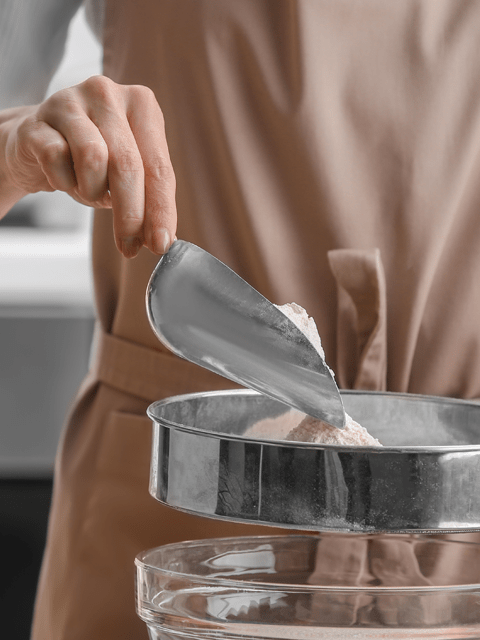
First of all, proper storage is a must. It is essential to store nut flours in the refrigerator or freezer to avoid rancidity. Because nuts are expensive, you want to protect your investment, not the mention flavor and nutrients.
Keep in mind that nuts are a common food allergen, and since most nuts can be well hidden in recipes, it is a good idea to tell people that your recipe contains nuts.
Nut Flour Basics
When it comes to raw recipes, it can be very confusing what the recipe author is using when calling for a nut flour. Nut flour can be made straight from nuts that have been ground in a food processor to a semi-fine powder. This “flour” is similar in texture to coarse cornmeal.
Nut flour can also be made from nut pulp, which is the remains of making nut milk. Both of these types of flours are indeed raw, providing the nuts that you started with are raw.
There may be times that you are reading a recipe for a cooked dish that calls for almond flour. They are usually referring to a nut flour that has been processed and packaged, which wouldn’t be a raw product. If you’re ever in doubt, contact the recipe creator and find out exactly what they used.
So keep in mind…
- Nut Flour can mean Nut Pulp – it is the leftover remains from making nut milk. This “flour” can be used wet or dry. The wet pulp will last for about 2 days in the fridge, or it can be frozen for later use. Or you can spread the wet nut pulp on the teflex sheet that comes with your dehydrator and dry at 105 degrees until it is completely dry. You can then grind it to a further powdery form.
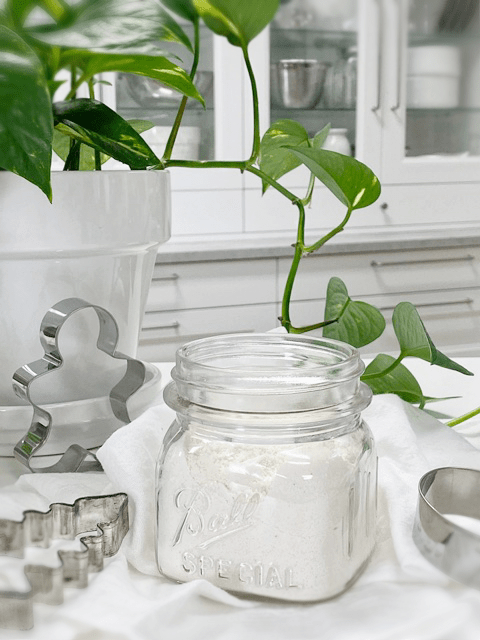
- Nut Flour can mean Nut Meal – this is made from raw nuts in your food processor or blender ground until it reaches a tiny crumbly consistency, as shown in the picture above. You have to be very careful that you don’t over-process it to where it starts to release too much of its oils and heads towards a nut butter stage. Nut meal has more oil and is coarser than commercial nut flours. If you want a real light and fluffy flour consistency, be sure that you soak and dehydrate the nuts before processing. Soaking will also help to release the enzyme inhibitors, which is very important. If you are looking for “white” flour for color-sensitive recipes, you can remove the skins from almonds right after the soaking process.
- Nut Flour can mean Processed Flour – that is made commercially. It has been heated and processed, which is not a raw product and is often used in baked goods that appeal to a gluten-free diet. This type of flour is drier and has a finer texture.
Can you substitute one for the other?
- Yes and no… sorry for the grey answer. But then again, this is also one of the significant aspects of making raw food recipes. You can be more creative and gives you wiggle room. When you bake, there is not as much forgiveness and leeway with your ingredients. When creating raw recipes, you can usually use one or the other, but it can alter the flavor and texture a tad. So keep that in mind.
- Nut Pulps offer a lighter texture, which is excellent in making raw breads, cakes, or croutons. As mentioned above, nut pulp is the remains from making nut milk. You can use it wet or dry. If you use it wet, it will add more moisture in the recipe, whereas if you dehydrate and grind it like flour, you may have to add more moisture to that recipe. Grinding it to a fine flour will also give you a more smooth texture.
- If you don’t have or can’t make nut milk to obtain pulp, you can use ground-up nuts making a “meal” (small crumbled texture). Nut meal will make a recipe more dense and heavy. I have made raw croutons with both the pulp and meal to test for myself what the difference is. The croutons with the pulp were much lighter and crunchier. Both tasted good; it was more about the mouth-feel.
© AmieSue.com



I just wanted to say I absolutely LOVE this website! It is now my daily go to!
Thank you so much for helping eating raw all slot together for me, Amazing!
Jaimee x
Thank you Jaimee! I appreciate you taking time out of your busy day to share that with me. amie sue :)
No where else have I seen these techniques explained so clearly! It is obvious that you are speaking from experience, as well as your professional training. And everything you do is so beautifully illustrated. I am so glad I found your website!
Thank you Naomi :) I really appreciate your kind words. I do my best to express the passion that have about raw / healthy foods. I try to take the guess work out of things. That way you stay inspired along your journey. Merry Christmas!!
in all my research it appears that cashews do contain phytic acid and in high amounts, this is the only website i have come across that states otherwise. wondered why you said this.
thankyou
vicki
Hi Vicki….
I will say that there is some conflicting information on the net regarding this very question. But to error on the side of caution, I added to soak and dehydrate them prior to making a flour. Many sites indicate that that process is not required because they don’t have “skins” such as almonds, pecans, walnuts. I am not referring to the nut shell, but the brown skin around it. But thank you for bringing that to my attention. It is always good to revisit things and see what the latest studies are showing. Have a great day, amie sue
I take pleasure in, result in I found exactly what I was looking for.
You’ve ended my four day lengthy hunt! God Bless you man.
Have a great day. Bye
i don’t usually have almond pulp. i guess i will have to moisten the almond flour, but how much water to flour?
Hello Paula,
It won’t have the same effect as using the almond pulp, at least in my experience. I don’t have a direct answer for your question. Sorry. amie sue
Hi Amie, I followed your advice today and made both the coconut flour from mature coconus, that we discussed about the other day, and almond flour from the left over nut pulp after making almond milk in my vitamix. The coconut flour from the mature coconuts turned out amazingly. I’m comparing it to the shredded coconut bought from Sprouts and it seems pretty similar.
I dehydrated them for about 10 hours and they are dry as sand. Definitely has a texture similar to flour. I have broken up the crumbles in the food processor.
One question I have however is, do you feel it is necessary to put the flour in the freezer even after dehydrating it? The reason I’m wonder is that I thought the whole point of dehydrating things was to preserve nutrients of things without having to utilize freezer space(my freezer is packed with a whole bunch of fruits and stuff as it is, and even more WET nut left over pulp!). I am going to be making oat flour from rolled oats or oat milk pulp as well and will be dehydrating it.
You put your coconut flour(store bought) and dried shredded coconut in room temperature right, not in the freezer? Thanks! I learn so much about your site every single day.
Good evening Andrew,
It sounds like you have been busy in the kitchen, that is wonderful. :)
It is not manditory to freeze the flours, just recommend for freshness. If you don’t have the freezer or fridge space just be sure to store them in air tight containers in a cool spot in your kitchen or pantry. I would use them within 2-3 months kept at room temp. I do keep all of my flours either in the fridge or freezer, just depends on where I have the space. :)
I just made oat flour a few days ago… hehe Have a wonderful evening and keep that passion alive in the kitchen! amie sue
Hi Amie, I have access to a lot of pecans. Some pecans’ quality are not good enough for the consumer market. I have put these through a grinder in an effort to see whether I could make some flour. The result is very moist and relate to a pulp. How could I make flour from this ? And what will the substitute values be for ordinary flour vs pecan flour in a receipe ?
Thanks for your advice.
Hello Annatjie,
I find pecans, walnuts, macadamia nuts hard to make a real fine flour out of them, mainly due to the oil content in them. I am sure that there is a way but it would require a decent amount of processing. Are you wanting to use the pecan flour in raw or cooked recipes? For cooked, I can’t really answer that question because I don’t bake much. For raw, it can be used in so many recipes…just replace other nuts or flours across the board. Keeping in mind the different flavor note that it will give a recipe.
Are these pecans raw? Have a blessed day, amie sue
HI Amie-Sue, We harvest our own pecans. I process pecans for the consumer market which are vacuum packed and sold to the retail market. The raw pecans which have marks coming from either the harvest or shelling process are not packed. I want to work these into a product which can be sold. I get a large number of requests for pecan meal which I cannot supply to. Regards. Annatjie
Annatjie, do you have an on-line site regarding your pecans and selling them? I have a few questions if so. If you would, could you email me at [email protected]? Thank you, amie sue
hi!!!ok i have many questions because i wan tto make my own milk and flours…if you could answer i woudl be happy.so
1.the pulp from almonds,hazelnuts etc when i make it to flour,will it be 1:1 with store bought??or i need to use them only to specific recipes?
2.can i make flour from nuts without roasting them?like soak,dehydrate and then grind?because hazelnut flour i want ot make needs to roast it to take off the skins…will it be a bitter flour if i leave them on?and can i use it in place of white hazelnut flour?
3.can i put nut milk in freezer in portions so i can use it other times?
4.about coconut flour those machines you mention…do they exctract the fat so it will be like store bought flour?what if i shred fresh coconut,dehydrate and grind?wont be like store bought?and coconut flour form pulp is defatted or not?
i am sorry for questions but i try to understand hwo to do this becaus ei dont want to spoil th enuts.
blanched nut flours in stores are made from whole nuts or pulp?since i want ot make hazelnut flour i need to soak it too?before i roast them for the skins or after?or its ok to leave them on?
aaah and nut butter hwo to preserve them?how long they last outside the fridge or inside?
Hello Demi,
Raw almond butter, peanut butter, and other nut/seed butters don’t have any preservatives, which makes them susceptible to rancidity and spoilage. Therefore, I wouldn’t recommend storing it out of the fridge, because that’s a great scenario for mold growth. The healthy unsaturated oils oxidize over time when exposed to heat, light, and air.
Use your senses when it comes to food (smell, look at it, taste test a small portion) before digging in. If it tastes bad, don’t eat it.
I can’t say for sure how long a product will last when you make it from scratch at home. Raw or roasted. Since I have done raw food manufacturing, I learned the only way to be able to have an exact time frame requires professional testing. You have to mail a sample of the product to a company who specializes in this. They run a battery of tests to come up with an expiration date.
I hope this helps, have a wonderful day, amie sue
I will do my best to answer your questions Demi..
Q – the pulp from almonds,hazelnuts etc when i make it to flour,will it be 1:1 with store bought??or i need to use them only to specific recipes?
A – Are you referring to baking or raw recipe? I don’t have a huge amount of experience with baking with nut flours. I tend to make most of my “bakes”
good, raw. If you are referring to baking… I would recommend researching baked recipe sites. For raw recipes, I use the 1:1 ratio. Do note that
most homemade flours are different in texture from commercially processed flour… it isn’t typically as fine.
Q – can i make flour from nuts without roasting them?like soak,dehydrate and then grind?because hazelnut flour i want ot make needs to roast it to take
off the skins…will it be a bitter flour if i leave them on?and can i use it in place of white hazelnut flour?
A – My site is all about raw so therefore I don’t roast my nut flours. Please read through this section. https://nouveauraw.com/raw-nut-seed-and-grain-
flours/. I soak all nuts and seeds, then dehydrate them before grinding them into a flour. I have use commercially processed hazelnut flour from
Red Mill in cooked and raw recipes (though it isn’t raw) and I don’t find it bitter and it has brown flecks from the skins in it. Getting the skins
off of the hazelnuts is a chore for sure, that is your call.
Q – can i put nut milk in freezer in portions so i can use it other times?
A – Yes you can. Please read through this post that I did on nut milk, https://nouveauraw.com/raw-recipies/smoothies-juices-nut-milks/nut-milk/
Q – about coconut flour those machines you mention…do they exctract the fat so it will be like store bought flour?what if i shred fresh
coconut,dehydrate and grind?wont be like store bought?and coconut flour form pulp is defatted or not?
A – Again, please this post: https://nouveauraw.com/raw-nut-seed-and-grain-flours/raw-coconut-flour-from-dried-coconut/. In my experience I don’t find
homemade raw flour anything like commercially made coconut flours, even the raw coconut flour from Coconut Secrets is very different then any of my
attempts in making it at home. Again, I really don’t know how you are wanting to use any of these flours. It doesn’t appear that raw is your first
priority so using flours raw or in baked goods will always differ depending on the recipe.
I hope this helps some, I did my best based on the information you gave me. Have a blessed holiday season! amie sue
thank you.yeah mostly i want to use the flours in bake goods and some in raw recipes that i have.i am all new to this and i dotn get how to make the best flour to use in recipes…thanks for answering my questins.just one last.i want to make almond milk from blanched almonds.and then make to flour.is it possible or it must be skins on almonds only for almond milk??thanks
Hello Demi,
You are welcome. Glad that helped. You can make almond milk from blanched almonds by all means. Take the pulp from the milk and dry it thoroughly and then grind it to a flour. Many times I purposely remove the skins from soaked almonds before I make my almond milk. This gives me a pure white flour after I dehydrate the pulp. Some people have a hard time digesting almonds with skins on it so a person might remove them for that reason too.
I am sure you are aware but I will mention that blanched almonds are not raw. amie sue :)
Why do we need to soak and dehydrate ? Its wierd because its already dry ? Since it becomes a flour our body should be able to get all the nutrients? And if you bake something with the flour and it gets contact with the liquid is it okay?
Hello Krystel,
There are multiple reasons as to why it is important to soak nuts and seeds. I have a post writen up about it that I would like for you to read.
https://nouveauraw.com/empowered-health/soaking-nuts-dried-fruit/.
Plus, I have each nut and seed broke down into individual posts if interested. https://nouveauraw.com/soaking-nuts-seeds-and-grains/
Once the nuts/seeds have been soaked and dehydrate, I then process it into a flour and yes it is ok that it comes in contact with liquid. I hope these posts help. Blessings, amie sue